Introduction
Bentonite cat litter dominates the global pet care market due to its exceptional clumping ability and affordability. However, concerns about its safety for cats and humans persist. This article explores the nature of bentonite cat litter, its manufacturing process, advantages, and addresses whether it poses health risks.
What is Bentonite Cat Litter?
1 The Raw Materials for Bentonite Clay Litter
La arena para gatos de bentonita se fabrica con arcilla de bentonita sódica natural, un mineral derivado de ceniza volcánica. Sus características clave incluyen:
Alta absorción: se expande hasta 15 veces al mojarse, formando grumos compactos.
Dust-Free Processing: Modern production reduces airborne particles.
2 Manufacturing Process of Bentonite Cat Litter
Minería: extraída de depósitos de arcilla de bentonita en regiones geológicamente activas.
Purificación: la arcilla se refina para eliminar impurezas.
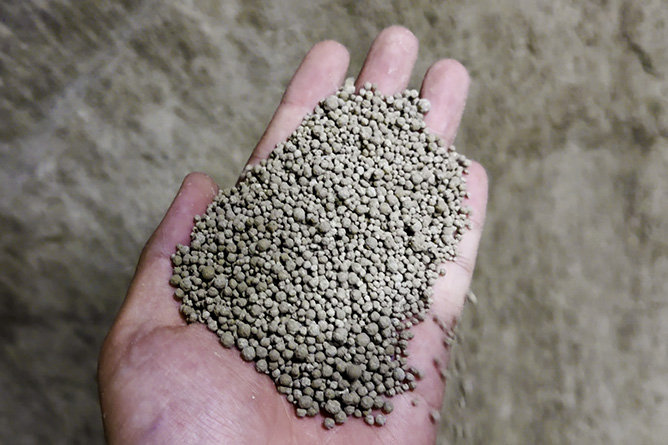
Granulation: Crushed into granules (1–3 mm) and dried at low temperatures to preserve porosity.
Additives: Some brands blend natural deodorizers (e.g., activated charcoal).
3 The Advantages of Bentonite Cat Litter
I. Rendimiento de adsorción física superior
Molecular-Level Rapid Response Mechanism
Bentonite (sodium montmorillonite) features a unique layered silicate structure that enables instantaneous liquid absorption. Upon contact with moisture, its lattice spacing rapidly expands from 0.9nm to 2.1nm, forming a dense three-dimensional network. Laboratory tests show that high-quality bentonite litter can fully encapsulate 0.5L of liquid within 6–8 seconds.Tecnología de bloqueo de olores tridimensional
Utilizing dual mechanisms of surface charge adsorption and microporous capture, bentonite effectively immobilizes odor molecules. Compared to standard silica gel litter, it exhibits a 42% increase in ammonia adsorption capacity and a 67% improvement in hydrogen sulfide retention. A hardened isolation layer forms on the clump surface, preventing secondary odor release.
II. Economic Efficiency Quantification
Comparación del ciclo de uso
Laboratory simulations (based on 6L volume):Non-clumping litter: Average usage cycle = 7–10 days
Bentonite litter: Usage cycle = 18–25 días
Cost-saving efficiency exceeds 60%.
Consumables Cost Matrix
Calculated for adult cats’ daily excretion:Litter Type Consumo mensual Monthly Cost (Mid-range Products) Mineral estándar 15–18 kg ¥90–120 Bentonite Clumping 8–10 kg ¥60–80
III. Intelligent Maintenance System
Optimización del proceso de limpieza
Ergonomic clumping characteristics reduce daily cleaning time to 2–3 minutes, achieving a 75% de mejora de eficiencia over traditional litters. Clump compressive strength (0.35 MPa) ensures zero residue during scooping.Hygiene Management
By maintaining a dry microenvironment (humidity <30%), bentonite suppresses microbial growth (e.g., E. coli). Pruebas de terceros confirman que los recuentos bacterianos tras 3 semanas de uso siguen por debajo de 12% of initial levels, superando el IPHS-2022 international pet hygiene standard.Adaptabilidad ambiental
Bentonite clumps feature pH buffering (6.8–7.2), preventing alkaline irritation to feline paws. Its Certificado ASTM D4239 low-dust formula (<0.8% dust emission) minimizes respiratory risks for sensitive users.
¿Es dañina la arena de bentonita para gatos?
Bentonite Material is Naturally Safe
La arcilla de bentonita pura no es tóxica ni reactiva. Los veterinarios confirman que:
Riesgos de ingestión: daño mínimo si los gatos ingieren pequeñas cantidades por accidente.
Dust Concerns: High-quality litters minimize dust, reducing respiratory irritation.
Potential Risks of Bentonite Cat Litter
1 Para gatos
Dust Inhalation: Low-grade litters may produce silica dust, linked to respiratory issues.
Paw Irritation: Sharp granules in cheap products can cause discomfort.
2 For Humans
Sodium Bentonite Exposure: Prolonged inhalation during litter changes may irritate lungs.
Chemical Additives: Scented litters often contain synthetic fragrances, triggering allergies.
Conclusion: Safe Use of Bentonite Cat Litter
Choosing high-quality bentonite cat litter and adopting these practices ensures safety:
Opt for Dust-Free Brands: Prioritize products labeled “low-dust” or “99% dust-free.”
Evita las variantes perfumadas: usa arenas sin perfume para reducir la exposición química.
Regular Cleaning: Scoop daily and replace litter monthly to prevent bacterial growth.
FAQs: Addressing Key Concerns
Q1: What Are the Disadvantages of Bentonite Cat Litter?
1.Heavy weight (hard to carry).
2. No biodegradable (a menos que se indique desechable por el inodoro).
3.Dust in low-quality products.
Q2: What is the Healthiest Cat Litter to Use?
Plant-Based Options: Tofu, corn, or walnut litters are biodegradable and low-dust.
Silica Gel: Dust-free and highly absorbent but pricier.
Q3: Is Bentonite Cat Litter Better Than Tofu?
Yes for Clumping: Bentonite outperforms tofu in odor control and clump durability.
No for Eco-Friendliness: Tofu litter is biodegradable and flushable.
Q4: What Cat Litter Should You Avoid?
Clay Litters with Silica Dust: Linked to lung damage.
Arenas aglutinantes para gatitos: riesgo de ingestión; usa alternativas no aglutinantes.
Recomendación final
While bentonite cat litter remains a top choice for its functionality, selecting premium brands and combining it with proper hygiene practices mitigates risks. For eco-conscious households, blend bentonite with biodegradable options like tofu litter.