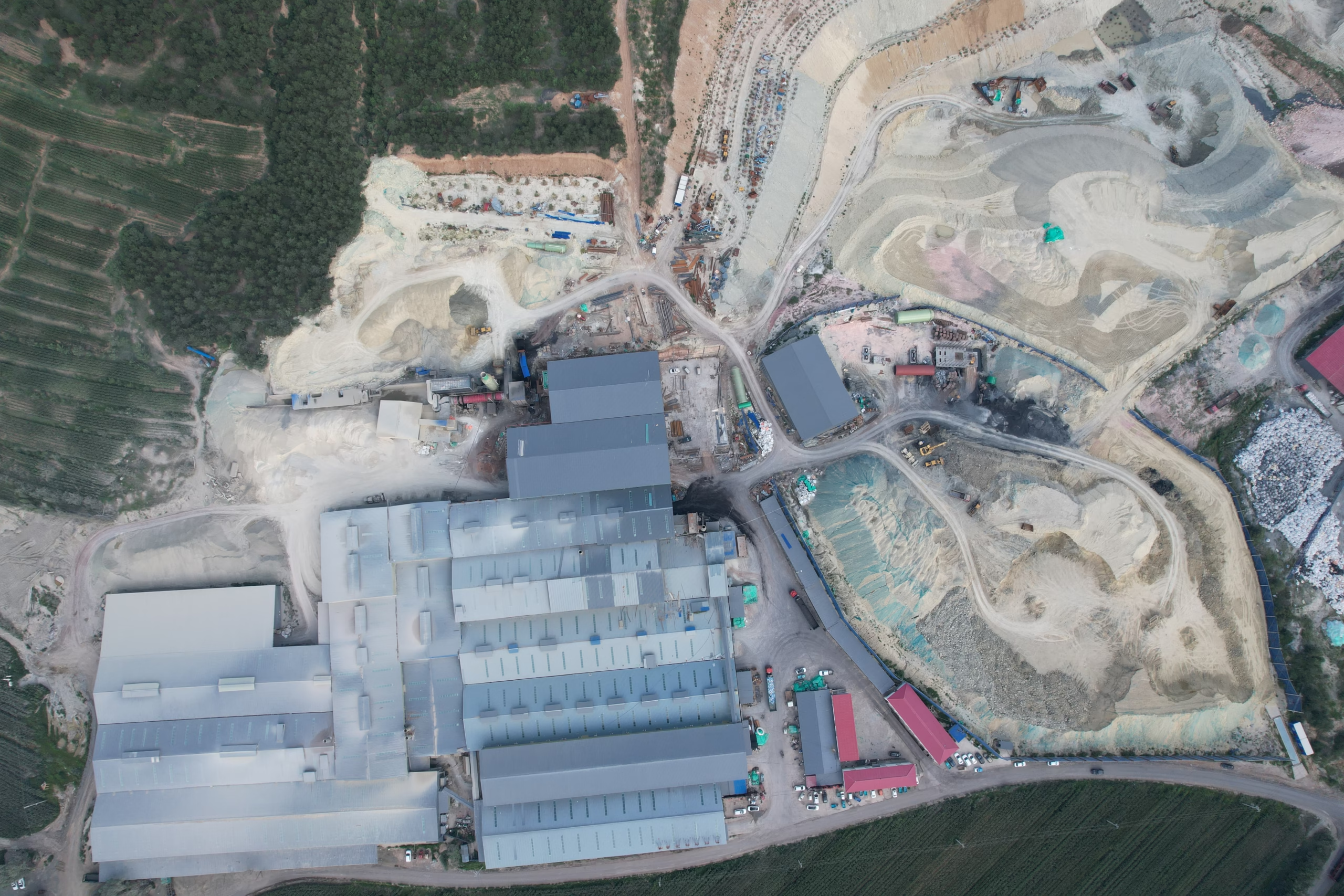
cat litter supplier - Choosing a cat litter supplier is not only a price comparison. For importers, distributors, private-label brands, and supermarket buyers, the safer decision is to check whether the supplier can keep mineral quality, production output, packaging, lead time, and export communication stable across repeat orders.
A reliable supplier should show where the bentonite comes from, how the factory controls dust and moisture, what packaging formats are available, and how the team handles samples, artwork, container loading, and after-sales questions.
Quick factory check before ordering
- Start with factory proof, not only catalog photos.
- Confirm whether the supplier can support your channel: retail bags, private label, bulk, or distributor replenishment.
- Compare clumping strength, odor control, dust level, granule size, fragrance options, packaging, MOQ, and delivery plan in one checklist.
- Ask for samples and batch consistency before negotiating a long-term contract.
Factory formula notes from LINGSHUAI
LINGSHUAI writes global wholesale and export purchasing content from factory production experience, keeping market claims general unless a target market is selected.
- Useful factory angles include low dust, fast clumping, odor-control particles, private label packaging, bulk packs, and export-ready documentation.
- Bentonite performance depends on mineral stability, moisture control, screening, dust control, clumping strength, odor-control formula, and repeat batch consistency.
- Supplier evaluation should connect product specs with factory proof: source control, sample approval, QC records, packaging capability, export loading, and after-sales communication.
| Formula option | Buyer value | Factory note |
|---|---|---|
| Activated carbon granules | odor-control positioning, visible black carbon particles for product differentiation | Use for deodorizing and odor-control product pages., Avoid exact performance claims such as percentage odor removal unless supported by test data. |
| Carbon crystal balls | premium visible additive for high-end product lines, more uniform visual presentation than crushed carbon | Use 'carbon crystal balls' or 'carbon deodorizing balls' as product naming, but avoid implying crystal/silica cat litter., Explain that it is an additive inside bentonite litter, not a separate litter type. |
| Blue zeolite granules | mineral deodorizing concept, visible color contrast in white or grey bentonite litter | Use as mineral additive wording., Avoid medical or antibacterial claims unless supported by testing. |
1. Check whether the supplier controls the mineral source
For bentonite cat litter, raw material stability decides much of the final product performance. A supplier with a controlled mineral source can manage granule consistency, moisture, swelling ability, and supply planning more reliably than a trader that only changes sources by price.
- Ask where the bentonite is sourced.
- Check whether the supplier can explain granule size and clumping behavior.
- Confirm whether the same specification can be repeated for future orders.
2. Review factory capacity and production workflow
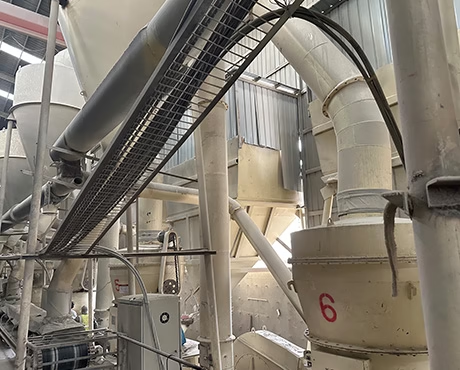
A good cat litter manufacturer should explain its production process from raw material selection to crushing, drying, screening, dust control, blending, fragrance or carbon addition, packaging, and loading. This helps buyers judge whether the supplier can handle repeat container orders.
- Factory area and production lines
- Daily or monthly output range
- Dust-control and screening process
- Packaging line capacity
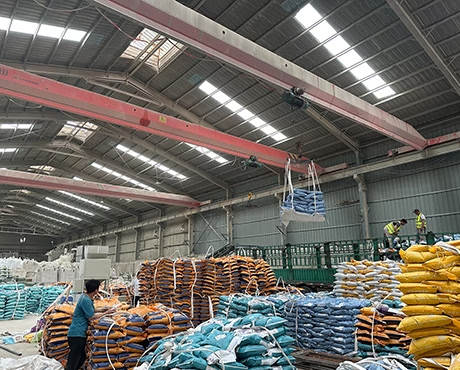
- Export loading experience
3. Compare quality control, not only samples
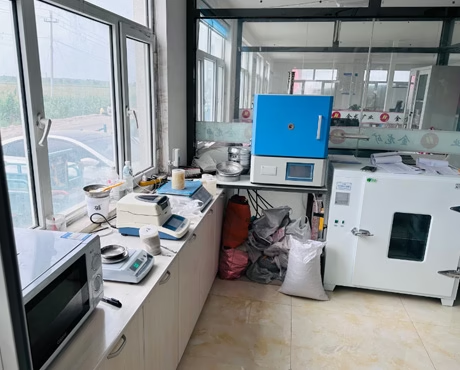
A sample can look good once. Wholesale buyers need to know whether each batch can stay close to the approved sample. Quality control should cover clump hardness, water absorption, odor control, dust, moisture, granule distribution, scent strength, and package sealing.
- Request a specification sheet.
- Keep an approved sample as the reference.
- Ask how batch records are stored.
- Confirm inspection before shipment.
4. Make packaging and private label details visible early
If you are building a retail brand, packaging is part of the product. Confirm bag size, handle type, zipper, printing method, carton or pallet requirements, barcode area, and language requirements before final price negotiation.
- Retail bag sizes such as 5L, 10L, 20kg, or 25kg
- OEM and private-label artwork support
- Scent and formula choices
- Pallet, carton, and container-loading plan
5. Match the supplier to your buying model
A supermarket buyer, online brand, importer, and regional distributor may need different supply support. Before choosing a cat litter supplier, define whether you need low MOQ trial orders, stable container supply, brand packaging, bulk shipment, or fast seasonal replenishment.
- Importer: documentation, container planning, and stable lead time
- Distributor: repeat product lines and predictable pricing
- Private label brand: packaging design and formula matching
- Retail chain: shelf-ready bags and quality consistency
6. Watch for red flags before placing the order
Low price is useful only when the product remains stable. Be careful if a supplier cannot explain the factory process, avoids sample comparison, gives no clear packaging details, or changes specifications during negotiation.
- No clear factory or production images
- Only generic product descriptions
- No specification sheet or batch-control explanation
- Unclear MOQ, lead time, or export terms
- No contact path for after-sales issues
Factory evaluation table
| Supplier factor | What to check | Why it matters |
|---|---|---|
| Mineral source | Bentonite origin, granule consistency, moisture control | Supports repeat product performance |
| Factory process | Screening, dust control, blending, packaging | Reduces batch variation |
| Quality control | Clumping, dust, odor, moisture, package sealing | Protects retail reputation |
| OEM packaging | Bag size, artwork, barcode, carton, pallet | Fits local channel requirements |
| Export support | Lead time, documents, loading, communication | Reduces procurement risk |
Next steps for samples and factory quote
FAQ
What is the first thing to check when choosing a cat litter supplier?
Start with factory and mineral-source proof. For bentonite cat litter, raw material stability and production control affect clumping, dust, odor control, and repeat order consistency.
Should I choose a trader or a cat litter manufacturer?
A trader may help with mixed sourcing, but a manufacturer usually gives better control over specifications, packaging, quality records, and repeat production.
What information should I provide when requesting a quote?
Send your target market, product type, granule size, fragrance needs, package size, expected order quantity, destination port, and any private-label artwork requirements.
Can one supplier support both bulk and private label cat litter?
Yes, if the factory has both bulk packing and retail packaging capability. Confirm MOQ, bag options, artwork process, and container-loading plan before ordering.